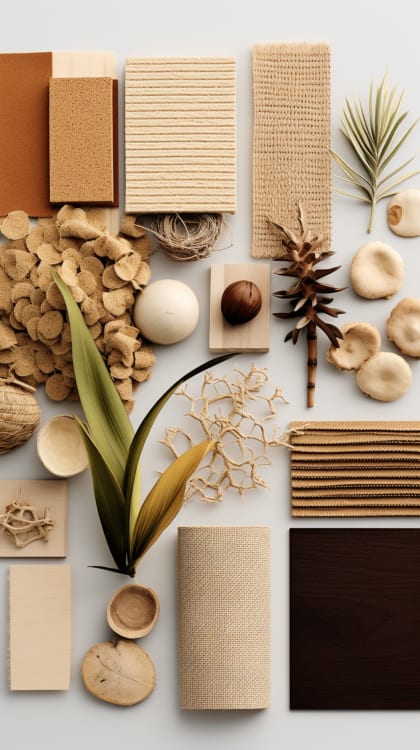
In our industry, sustainability isn't just a buzzword, it's a guiding principle.
The growing demand for sustainable and renewable materials has ushered in a wide array of eco-friendly alternatives. These options not only appeal to our design aesthetics but also contribute positively to our planet. From mushroom leather to fabrics enriched with vitamins, the options are both environmentally conscious and groundbreaking.

MUSHROOM MAGIC: LEATHER'S EARTHY COUSIN
Mushrooms have long been cherished in culinary delights, but now they're making waves in the design world too. Mushroom leather, often referred to as mycelium leather, is the ultimate choice for the eco-conscious designer. Crafted in vertical farming facilities powered by renewable energy sources, this material is not just ethical but exquisitely stylish. And guess what. It's a sustainable alternative to traditional animal leather.
Mushroom leather is finding its way into the collections of fashion leaders such as Stella McCartney and Hermès, demonstrating a growing commitment to environmentally friendly options within the industry. Even sportswear giant Adidas has explored its potential in footwear designs. This shift reflects a broader trend toward eco-consciousness, with more brands expected to follow suit as consumers increasingly seek ethical and sustainable products.
ECO-CHIC: EXPLORING SUSTAINABLE ALTERNATIVES
But the world of sustainable design doesn't end with mushrooms. No, my friends, it's a vast and thrilling landscape, and there's plenty more to explore.
- - Cork, Hemp, Bamboo: These earth-friendly materials have long been cherished for their versatility. Cork, known for its distinctive texture and acoustic benefits, now enhances flooring and wall coverings, providing both warmth and acoustic comfort to interiors. Hemp, valued for its strength and durability, serves as a sustainable choice for crafting long-lasting furniture and textiles, with a minimal environmental footprint. Meanwhile, bamboo, celebrated for its fast growth and renewability, adds elegance to various interior elements, including flooring, cabinetry, and furniture.
- - Recycled Polyester: It's a responsible choice born from the very bottles we drink from. Recycled polyester is the epitome of eco-friendly design, repurposing post-consumer plastic bottles to create sustainable elements within interior spaces. This transformation from discarded bottles to design elegance is a testament to the power of innovation and conscious choices in today's design landscape.
·
- - Tencel: Derived from sustainably sourced wood pulp, Tencel is renowned for its softness, breathability, and silk-like feel. This versatile material finds its way into a wide array of interior products. Whether it's in bedding, upholstery, or drapery, Tencel proves that eco-consciousness and luxury can coexist in interior design.
- - Piñatex: Imagine pineapple leaves transformed into a leather alternative. Piñatex is the epitome of creative recycling, offering both style and sustainability. This versatile textile isn't confined to interior design; it stands as a testament that sustainability and luxury can go hand in hand. Leading fashion houses such as Hugo Boss and H&M have integrated Piñatex into their collections. Meanwhile, companies like Rombaut and Bourgeois Boheme have leveraged this innovative material to create ethical and fashion-forward footwear.
- - Seaweed: The ocean, a generous provider, gifts us SeaCell fabric. This remarkable material is a unique blend of seaweed and cellulose, which not only supports sustainability but also provides a tangible connection to the ocean's wonders. Its gentle touch and natural feel make it a favored choice for clothing, bedding, upholstery, accessories, and more.
- - Coffee Fabric: A fusion of recycled plastic bottles and coffee grounds, this material is a sustainable sip of style. It's proof that innovative thinking can turn waste into wonder. This eco-conscious material opens new doors for interior designers, offering a unique and responsible choice for crafting visually stunning and eco-friendly spaces. Beyond interiors, this innovative material extends its reach to fashion, where it's used to craft eco-friendly bags and accessories.
BEYOND MATERIALS: A DIVE INTO THE FUTURE OF DESIGN
In the Alternative Design podcast episode titled, "Give the Buildings Yogurt", Rosie Broadhead, a visionary sportswear designer, explores the fusion of probiotics into textiles. Picture upholstery infused with vitamins and supplements, providing a nutrient boost while you sit in your favorite chair. It's an ode to the future, where design isn't just about aesthetics but a holistic experience.